



Communion Cups
Communion cups, or common cups as they are often referred to are used to distribute Sacramental Wine to the faithful during the Liturgy of the Eucharist, or communion. The term "Common" references their communal nature as these cups are anything but common in their construction. As you would expect with a vessel that holds the Blood of Christ, these common cups are made to the highest quality standards. The base metal for the cups is most often brass, with sterling silver, stainless steel or non-leaded pewter also serving as choices.


Communion Cup - Silver 7589S 10 ounce capacity
Product ID: 7589S

Communion Cup 2432Bp Bright Inside lined 24k Gold
Product ID: ZZ-2432BP
Communion Cup 2432Sf Soft Inside Finish lined 24k
Product ID: ZZ-2432SF

Communion Cup 24k Satin Gold exterior Common interior
Product ID: ZZ-2581SF

Communion Cup 2595 Bright Inside Swirl lined 24k
Product ID: ZZ-2595BP
Communion Cup 2595 Bright Inside Swirl lined 24k
Product ID: ZZ-2595SF

Communion Cup 6 Tall 24Kt Gold Plated Polished
Product ID: ZZ-2605BP

Communion Cup All Satin Gold
Product ID: ZZ-2605SF
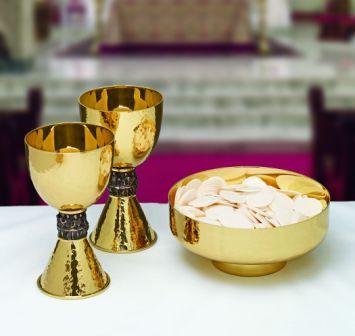
Communion Cup Bright Inside 7 x 16 Oz Host Capacity 4210
Product ID: ZZ-4221BP

Communion Cup DISCONTINUED 7-¼ 3-½ Polished lined 24k Gold
Product ID: ZZ-2933GP
Communion Cup DISCONTINUED 7-¼ 3-½ Satin Finish lined 24k
Product ID: ZZ-2933GSF

Communion Cup POLISHED Hammered Distribution 24k Gold Exterior...
Product ID: ZZ-2581HBP

Communion Cup Polished Pewter 24k Gold Plate Silver Plated
Product ID: K-302
Communion Cup SATIN Hammered Brass Gold Exterior Interior item no
Product ID: ZZ-2581HSF

Communion Cup Satin with Polished Interior
Product ID: ZZ-2581BP
Communion Cup Short 5-½ 12 oz Exterior Interior
Product ID: ZZ-2581SHB
Communion Cup Short 5-½ 12 oz Satin Exterior
Product ID: ZZ-2581SHS

Communion Cup Soft Inside Finish 7 16 Oz
Product ID: ZZ-4221SF

Gold Chalice With Tiny Well Paten
Product ID: A-3306G

Gold Common Cup 617G 6 inch 14 ounce capacity
Product ID: 617G

Gold Common Cup 7003G h 9 ounce capacity
Product ID: 7003G

Gold Common Cup 715G 6 inch 12 ounce capacity
Product ID: 715G

Gold Communion Cup 9 ounce capacity quality
Product ID: 608G
Gold Communion Cup Common 6 inch 12 ounce capacity
Product ID: 7589G

Gold Communion Cup Common 6 inch 14 ounce
Product ID: 803G

Gold Communion Cup Common 612G 6 inch 11 ounce
Product ID: 612G

Gold Communion Cup Common 713G 5- inch Base diameter
Product ID: 713G

Gold Communion Cup durable Common 6--? inch 14 ounce
Product ID: 802G

Gold Communion Cup Set Common 612G Tray 24 Kt Plated
Product ID: CS-612G

Silver Communion Cup Common 7 inch 9 ounce capacity
Product ID: 713S

Silverplate Communion Cup 715S 6 inch 10 ounce capacity
Product ID: 715S
Sterling Silver Communion Cup 7589 Common Body
Product ID: 7589STLG

Silverplate Large Dish Paten (Gold Pictured)
Product ID: 4500S
Common cups are generally made of either high quality, solid brass and then 24k gold plated or silver plated.
Most of our communion cups are lined in 24k gold which holds up better than silver to the acidity of the wine.
We also carry lead-free pewter common cups. Pewter is very durable and does not react with wine so it is good choice for services where 24k gold is not required by Canon Law or other church or logistical requirements.
Cannon Law generally calls for the cup interior to be lined in 24k Gold, although exceptions do exist. As a practical matter, most of our cups that are described or pictured as "Gold" are entirely plated in 24k Gold on the outside and the cup interior is lined in 24k Gold. The vast majority of cups we sell are 24k Gold Plated. The bulk of the remainder of the cups we sell feature silver exteriors (plated or oxidized) with 24k gold plated or lined interiors. Stainless and pewter are not big sellers for a variety of reasons. If your church is Catholic and in the USA, you almost always should be using 24k gold lined cups (as opposed to unlined cups, glass, ceramic, wood) unless your bishop has approved the use of a different material for some reason.
For churches seeking an even finer vessel, we offer sterling silver cups instead of the usual brass cup. The sterling cups are more expensive than brass, but they do offer the added advantage of being less prone to pitting from the acidity of the communion wine. Theoretically, a gold-lined sterling cup should be no more resistant to pitting than a gold-lined brass cup, and in initial use, that is typically what you will find. But as time goes by and cups are repeatedly wiped or cleaned (often improperly), the gold plating can wear off, exposing the base metal. When this wear occurs, the brass cups tend to pit sooner/more than a sterling cup would.
Proper care of your communion cups is essential to keeping them free from pitting. Immediately following the service, the wine should be rinsed out (in the sacrarium sink) taking care not to submerse the cup in water or allow water to touch the point of contact between the base and cup. (Water can get into this crack and cause corrosion of the interior of the base). Gently wipe the exterior with a clean, soft flannel cloth (you are tying to avoid scratching the soft, 24k gold plating) to remove fingerprint oils and diirt that could scratch the gold. You can generally let the cups air dry. If necessary to use a soap for cleaning, we suggest wetting your clean fingers and than applying a drop of a non-abrasive dishwashing liquid to your fingers. lightly and quickly rub your fingers under running water to create a sudsy film on your fingers, then wipe your fingers around the rim and interior of the cup to gently remove dirt, lipstick, etc. Rinse with clean water and allow to air dry or gently blot dry with a clean cloth. NEVER use an abrasive cleaner or any type of polish on a cup. Most polished contain abrasives which will scratch the gold plating. TIP: Remove your jewelry (rings, watches, bracelets) and don cotton gloves before handling Sacred Vessels to preserve their finish.
Once a Sacred Vessel is starting to show signs of wear, interior cup scratching, pitting, etc. you should consider refinishing and re-goldplating or replacement of the vessel.